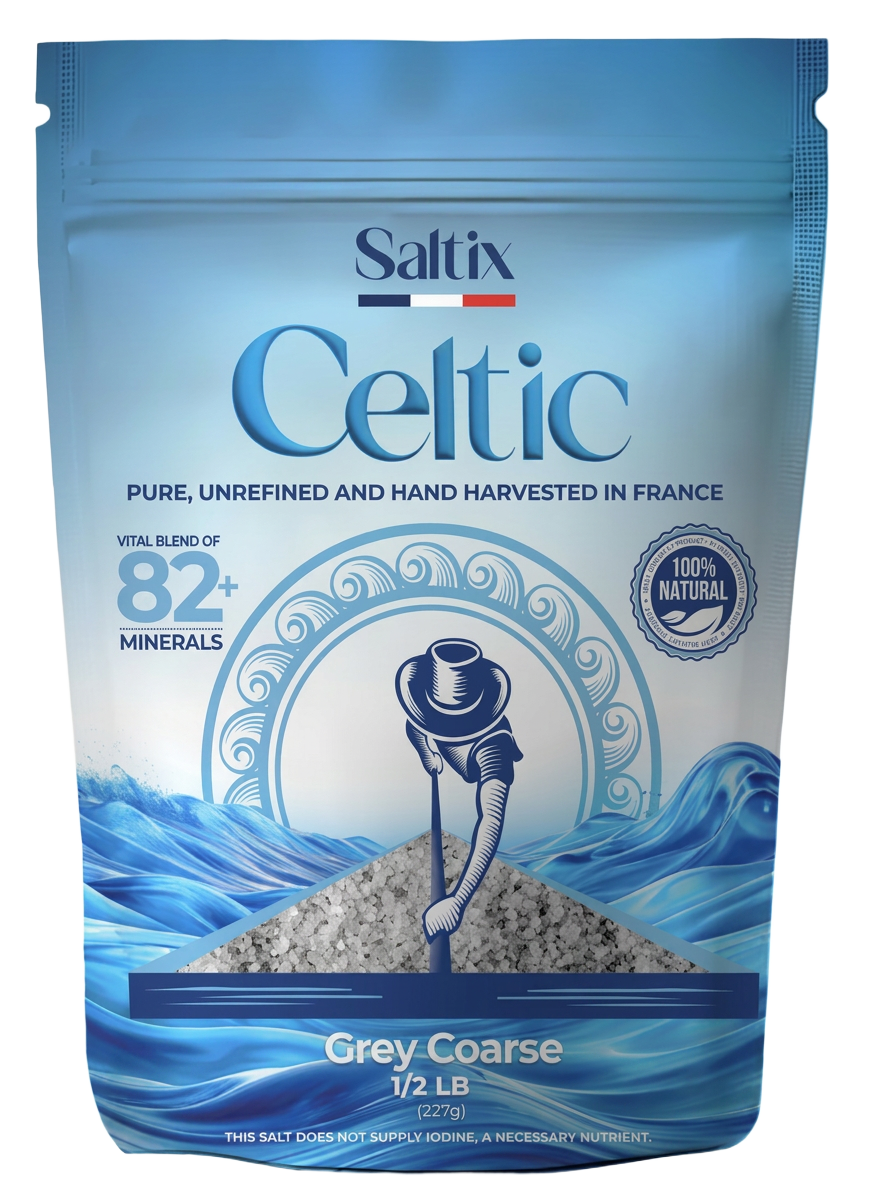
What is Celtic sea salt?
Celtic sea salt — known in France as sel gris, or French Grey salt — is a moist, unrefined sea salt hand-harvested from the clay-lined salt ponds of Guérande on the Brittany coast. Skilled harvesters (called paludiers) have been raking it by hand from the same marshes for over a thousand years. Its distinctive grey color comes from the mineral-rich clay beneath the ponds, which passes its trace minerals into every crystal.
Unlike refined table salt — which is heated to over 1,200°F, bleached, and mixed with anti-caking chemicals — Celtic salt is sun and wind dried at low temperature. Nothing is added, and nothing is stripped out. What you taste is exactly what the ocean deposited.
The 82+ minerals inside
Ordinary table salt is roughly 99.9% sodium chloride. Celtic sea salt contains sodium chloride alongside 82+ trace minerals and electrolytes that your body actually uses every day:
Plus dozens more, including selenium, chromium, molybdenum, and boron — present in the trace amounts your body evolved to absorb from the sea.
Six benefits of Celtic sea salt
The natural balance of sodium, potassium, and magnesium in Celtic salt helps your cells hold water more effectively than plain sodium chloride. A pinch in your morning water is a simple, mineral-rich electrolyte.
Celtic sea salt delivers sodium alongside the trace electrolytes your body actually uses — a smarter alternative to sugar-loaded sports drinks.
Because it's unrefined, Celtic salt naturally contains potassium and magnesium — two minerals that support cardiovascular balance, not just raise sodium levels.
Real mineral salt helps the body produce the stomach acid needed to break down food and absorb nutrients from every meal.
Ordinary table salt is bleached and mixed with anti-caking chemicals. Celtic salt is hand-raked and sun-dried — nothing added, nothing stripped away.
The mineral profile creates a soft, briny finish instead of the sharp, flat bite of refined salt. Less is more — you use less to season better.
Celtic sea salt vs table salt vs Himalayan pink
How to use Celtic sea salt every day
- Morning mineral water. A pinch in a glass of water with lemon — a clean electrolyte to start the day.
- Finishing salt. Sprinkle on eggs, avocado toast, roasted vegetables, or steak just before serving.
- Cooking. Season pasta water, soups, and stews — you'll use less than table salt.
- Post-workout. A small pinch in water with citrus replaces electrolytes lost through sweat.
- Baking. Adds depth to bread, cookies, and even chocolate desserts.
Is Celtic sea salt safe?
For most healthy adults, unrefined Celtic sea salt is a smart, whole-food alternative to processed table salt. Its mineral profile means the same pinch delivers more nutrition than plain sodium chloride. If you have high blood pressure, kidney disease, or are on a medically restricted sodium diet, talk to your doctor about the right daily amount for you.
Frequently asked questions
What is Celtic sea salt?
Celtic sea salt (also called French Grey or sel gris) is an unrefined sea salt hand-harvested from the coastal clay ponds of Guérande in Brittany, France. Its grey color comes from the mineral-rich clay it's raked from, and its natural moisture means it's never dried at high heat.
How many minerals does Celtic sea salt contain?
Celtic sea salt contains 82+ naturally occurring trace minerals and electrolytes, including magnesium, potassium, calcium, iron, and zinc — minerals that are stripped out of refined table salt during processing.
Is Celtic sea salt healthier than table salt?
Celtic salt is unrefined and unbleached, and it retains the trace minerals table salt loses in processing. It also contains no anti-caking agents or added ingredients. Sodium intake still matters — but the same amount of Celtic salt delivers a broader nutrient profile.
How much Celtic sea salt should I use per day?
Most healthy adults do well with roughly 1/4 to 1/2 teaspoon per day across meals. If you're active, sweat often, or follow a low-carb diet, your needs may be higher. Always check with your doctor if you have blood pressure or kidney concerns.
Why is Celtic sea salt moist?
It's naturally sun and wind dried instead of kiln-dried, so it holds a small amount of ocean moisture. That's a mark of quality — it means the minerals and structure are intact.
Can I use Celtic salt in electrolyte drinks?
Yes. A small pinch in a glass of water with a squeeze of citrus is one of the simplest, cleanest electrolyte drinks you can make — no sugar, no dyes, no synthetic additives.